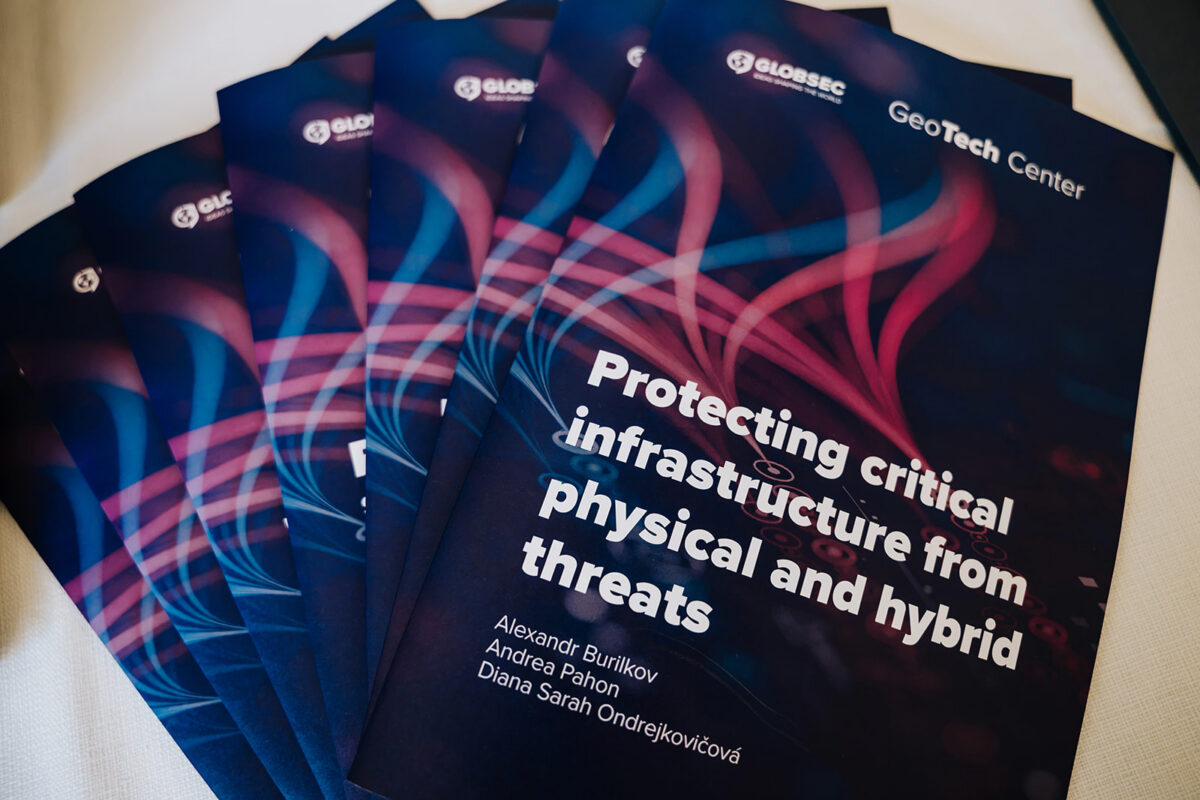

On October 1, 2026, the GLOBSEC GeoTech Center, in cooperation with the Swedish Ministry for Foreign Affairs, hosted a closed-door roundtable in Brussels on protecting Europe’s critical infrastructure against physical and hybrid threats. The event brought together senior representatives from EU institutions, NATO, national authorities, infrastructure operators, industry and the expert community. GLOBSEC’s newly published paper, “Protecting Critical Infrastructure from Physical and Hybrid Threats,” provided the starting point for a discussion on where Europe’s protection gaps lie and how to address them.
Infrastructure Across Borders
Europe’s infrastructure crosses borders, but responsibility for protecting it remains largely national. This leaves gaps around interconnectors, cable landing stations, offshore facilities and ports, where several authorities and operators may share responsibility. Disruption at one of these points can spread well beyond the country or sector in which it occurs. Communication networks are particularly important because so many other essential services depend on them.
Working with Infrastructure Operators
Much of this infrastructure is privately owned and operated. Governments therefore need operators involved in preparedness from the outset, with a role in developing plans and testing how they work. The Nordic approach offers useful experience here: cooperation is built through longstanding relationships, trust and regular exercises. These conditions take time to establish, and the model cannot simply be copied elsewhere.
Keeping Services Running and Restoring Them
Some components take years to replace, making access to spare parts and repair capacity a pressing concern. Decisions about which assets to prioritise need to reflect these realities. Redundancy and security measures built into new projects can reduce the impact of disruption, while exercises across companies and borders help reveal problems that plans alone may miss. During an incident, clear contact points and agreed procedures make coordination easier. Public communication matters too: exaggerating an adversary’s capabilities can add to the disruption and uncertainty an attack is intended to create.
Contracts, Funding and Procurement
Common European provisions could help avoid conflicting arrangements across borders. More funding for protection is needed in the next Multiannual Financial Framework, alongside recognition of security costs in network tariffs and EU funding instruments. Procurement requirements also need careful handling where publishing information could expose the infrastructure being protected.
Attribution and the Cost of Attacks
Europe faces a difficult deterrence challenge: hybrid attacks are relatively cheap to carry out, their sponsors can deny responsibility, and the consequences are often limited. The use of criminal groups and other proxies makes it harder to establish who is behind an attack and decide how to respond when the evidence is compelling but incomplete. Different perceptions of the threat across member states also make a coordinated response harder. Sanctions, continued support for Ukraine and investment in Europe’s own capabilities were discussed as ways to impose greater costs on those responsible.
Technology and Transatlantic Cooperation
Technology brings additional choices. Reliance on high-risk vendors remains a concern, as does the need to protect sensitive data against future quantum threats. Communication networks could also help detect drones and monitor subsea cables. Decisions about cloud and digital services require scrutiny of dependencies, while preserving access to trusted providers and capabilities from NATO allies. Transatlantic cooperation remains important as Europe works to strengthen its own capacity.
Key Takeaways
- Think in systems, not assets: Protection must address dependencies across borders and sectors, with clearly allocated responsibilities.
- Embed operators in preparedness: Governments and industry must jointly develop plans, share information and practise responses before a crisis.
- Plan for continuity and recovery: Spare parts, repair capacity, redundancy and cross-border exercises are as important as prevention.
- Strengthen legal and financial foundations: Crisis-ready contracts, security clearances and adequate funding are essential to effective protection.
- Connect resilience with deterrence: Credible attribution and meaningful consequences must raise the cost of hybrid attacks.
Proposed Solutions
- Develop common EU frameworks for crisis contracts, changes of control and the transfer of critical assets.
- Expand security clearances and trusted information sharing for private-sector personnel.
- Increase infrastructure protection funding and recognise security investments in network tariffs.
- Adapt procurement rules to safeguard sensitive infrastructure information.
- Expand regional information-sharing hubs and joint cross-border exercises.
- Harmonise risk assessments and minimum security standards for critical cross-border assets.
- Strengthen attribution capabilities and response options.