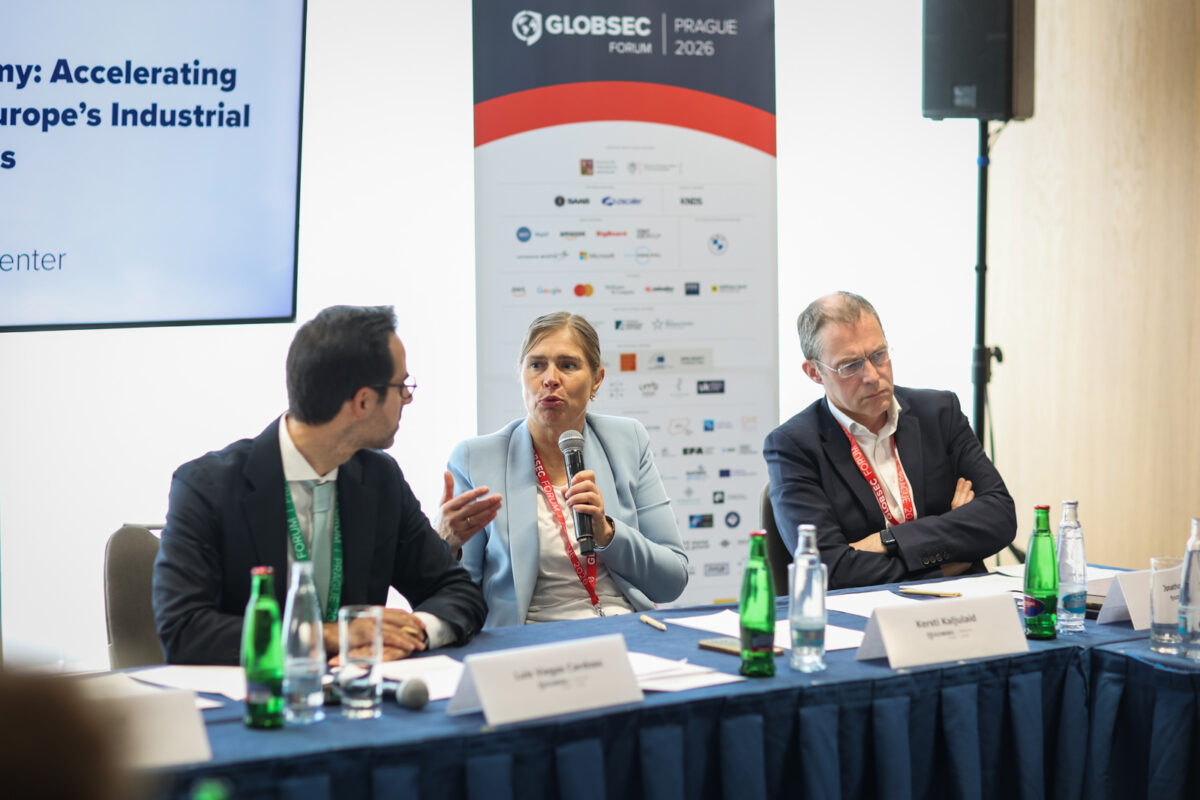

As artificial intelligence moves from experimentation to large-scale deployment, Europe faces growing pressure to transform its technological potential into economic and industrial competitiveness. While recent years have focused on AI governance and regulation, attention is now shifting toward adoption, implementation, and scaling AI across key sectors of the economy.
The discussion examined how Europe can accelerate AI deployment, strengthen its industrial competitiveness, support innovation, and deepen cooperation between governments, industry, and international partners.
Key Takeaways
From Regulation to Deployment
- Participants agreed that Europe’s priority should be accelerating AI adoption across industry, public services, and critical infrastructure. Many warned that Europe risks regulating faster than it implements, potentially weakening its competitiveness.
Building on Europe’s Industrial Strengths
- Rather than competing directly with the United States and China in foundation models, Europe should capitalize on its strengths in manufacturing, healthcare, energy, and engineering, where AI can deliver significant productivity gains.
Government as an Enabler
- Governments should reduce barriers to AI adoption by improving access to computing infrastructure, skills, procurement opportunities, and interoperable data systems. Public-sector deployment of AI can also help build expertise and public trust.
Supporting Businesses and SMEs
- Participants noted that the main challenge for many companies, particularly SMEs, is not access to AI models but the organizational capacity and expertise needed to integrate AI into existing business processes.
Open Technological Sovereignty and Transatlantic Cooperation
- The discussion emphasized that Europe should strengthen its technological capabilities while remaining closely connected with trusted international partners. Continued EU-US cooperation on AI, digital infrastructure, cybersecurity, and common standards was seen as essential for long-term competitiveness.
Proposed Solutions
- Accelerate AI deployment across strategic industrial sectors.
- Improve access to computing infrastructure, high-quality data, and digital skills.
- Help SMEs adopt AI through technical expertise and implementation support.
- Promote greater AI adoption within the public sector.
- Ensure implementation of the AI Act remains innovation-friendly.
- Strengthen public-private partnerships and deepen transatlantic cooperation on AI and emerging technologies.