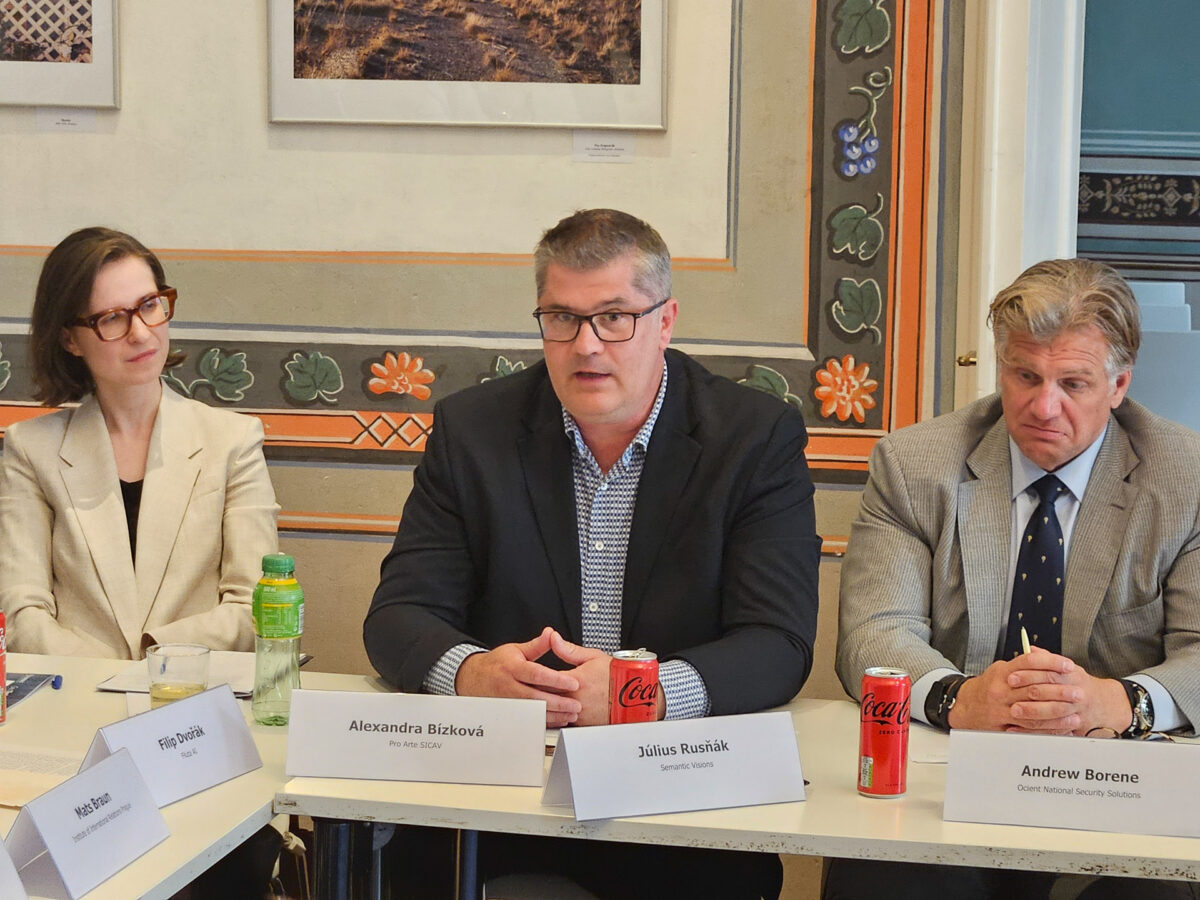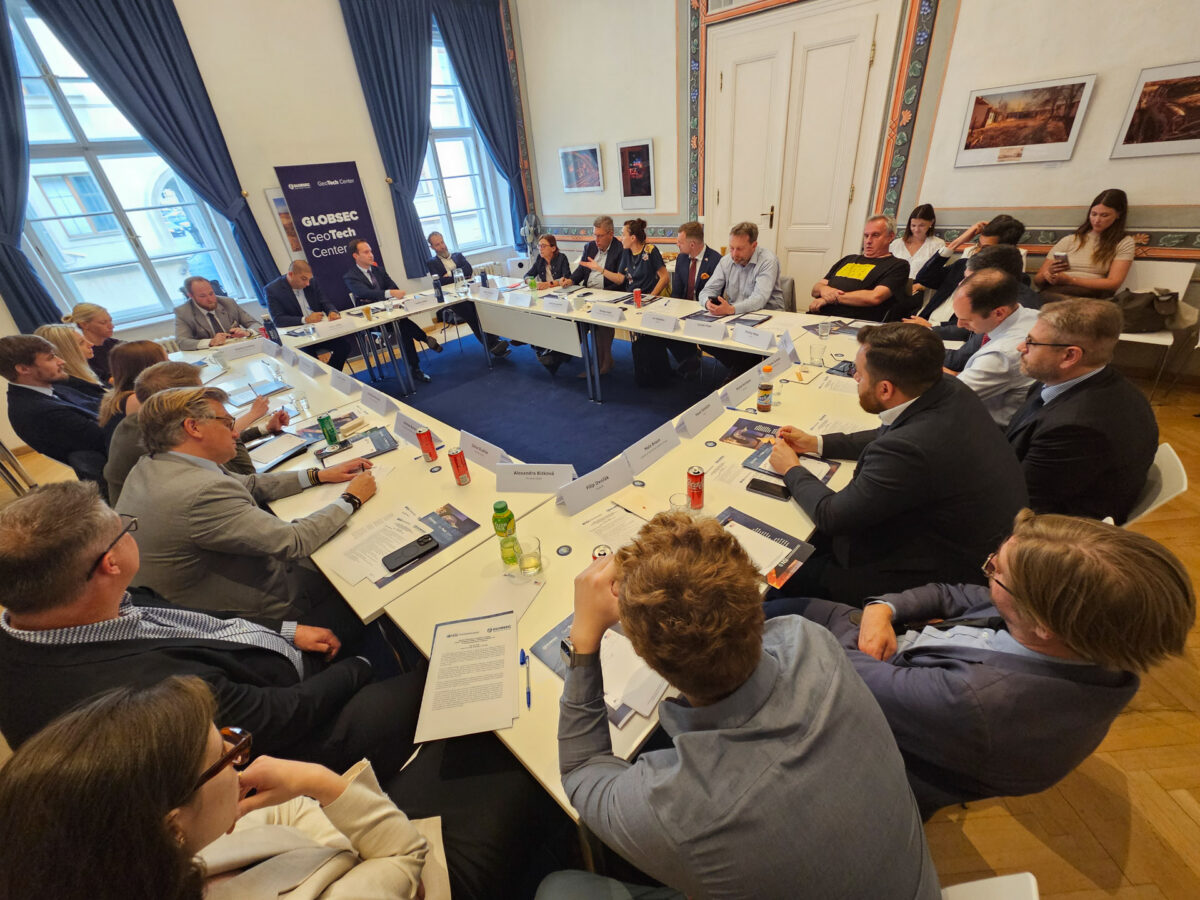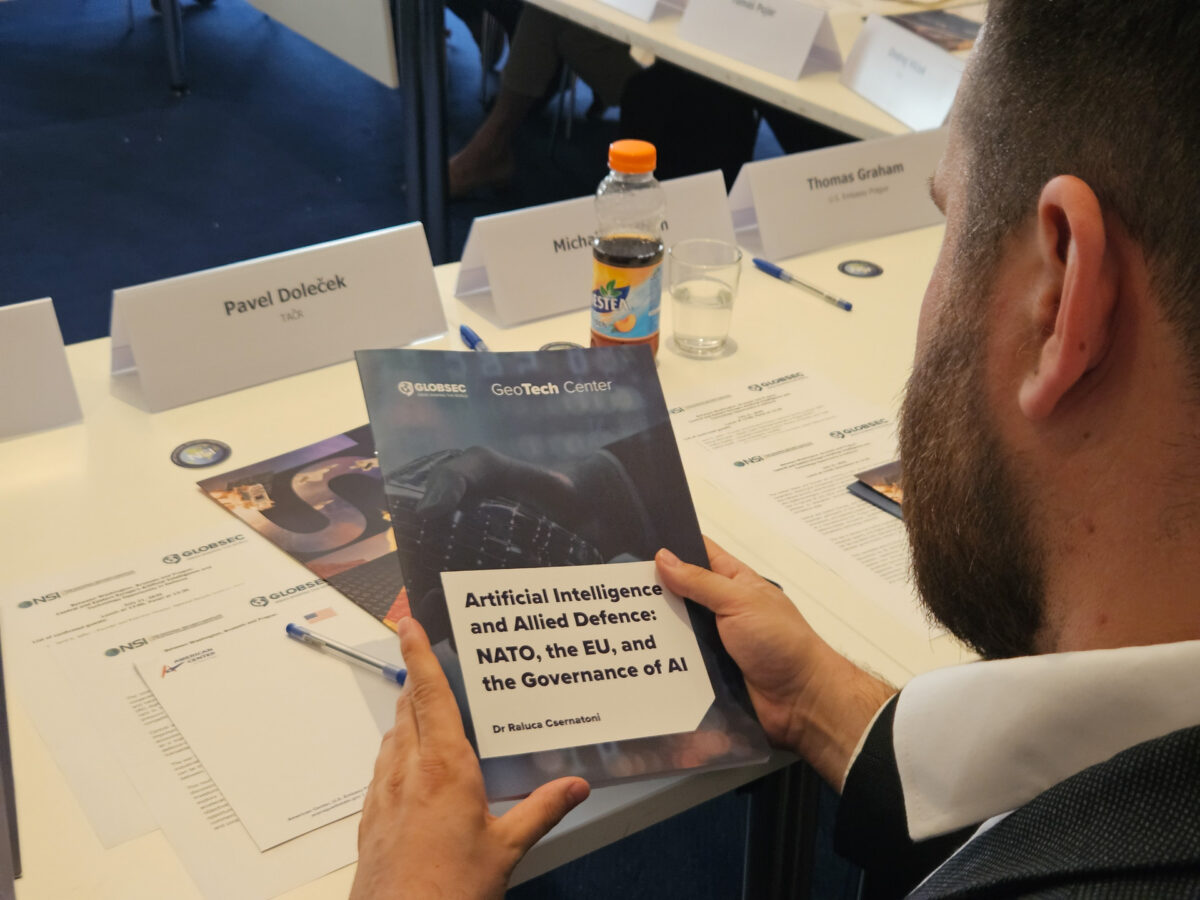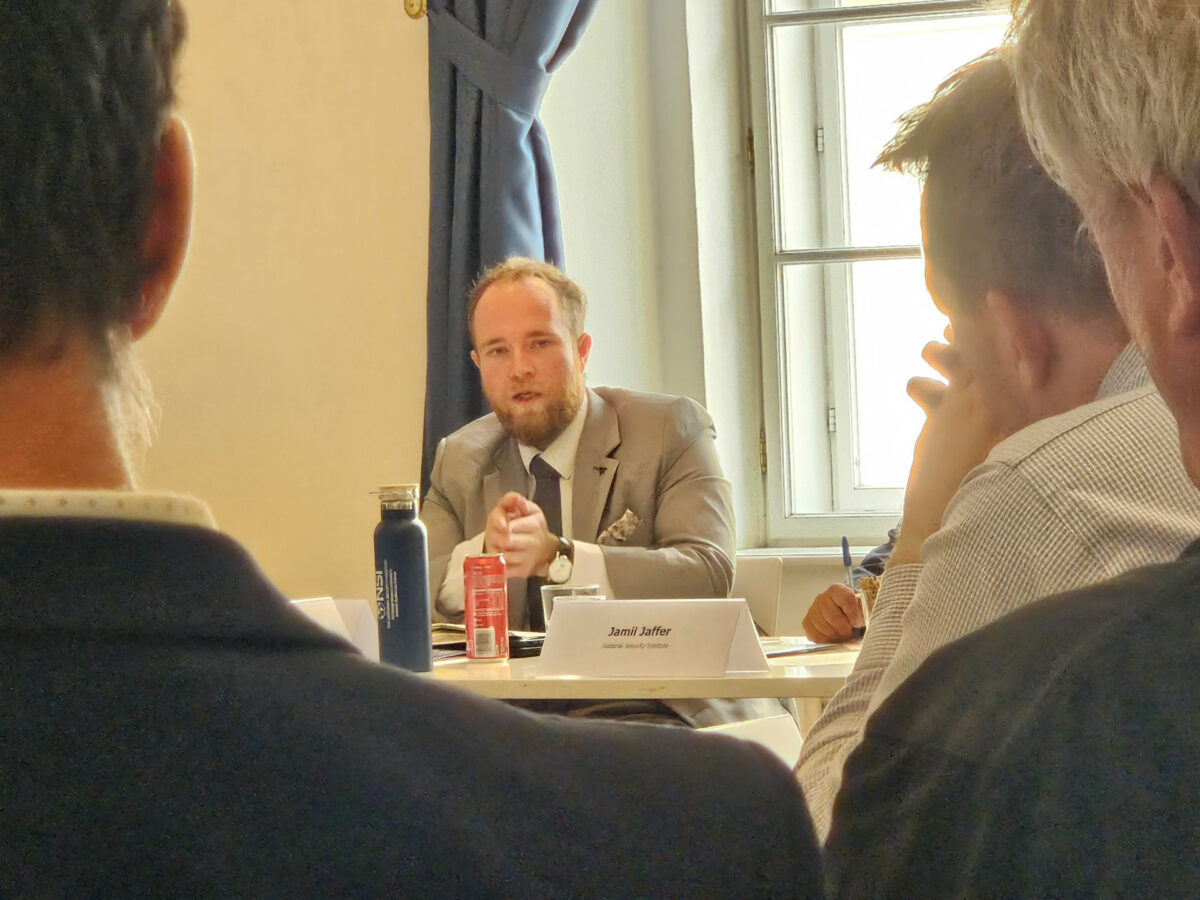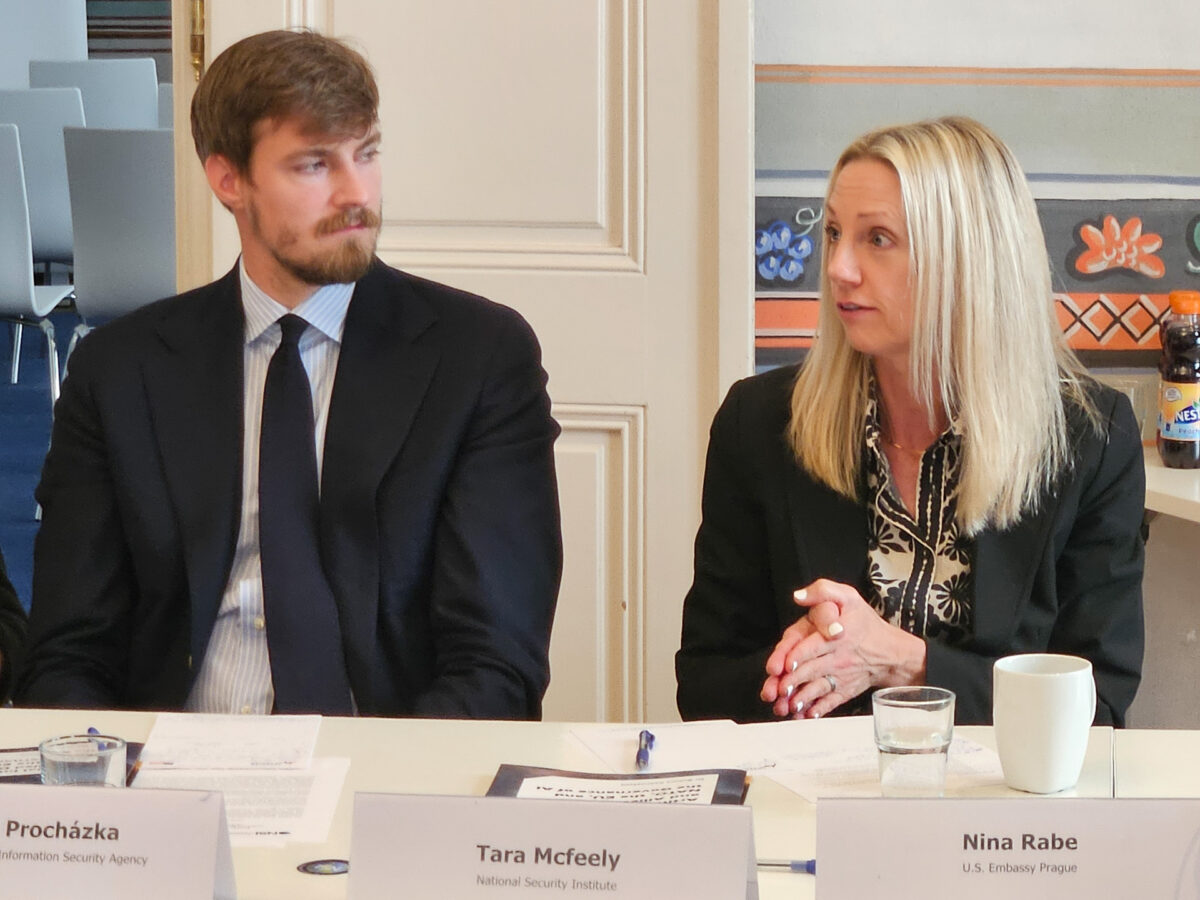
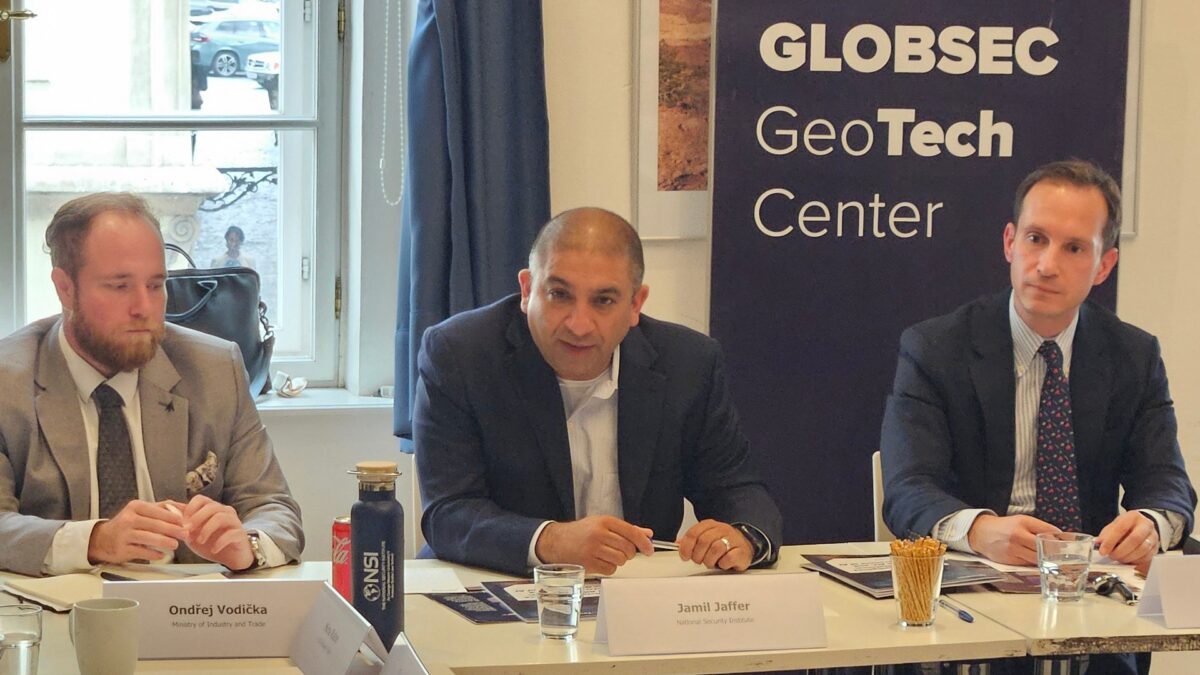
On July 21, 2026, the GLOBSEC GeoTech Center, in collaboration with the National Security Institute (NSI) at George Mason University’s Antonin Scalia Law School, hosted a high-level expert roundtable at the American Center in Prague. As part of GLOBSEC’s ongoing series of year-round activities in the Czech capital, the event brought together a distinguished transatlantic group of policymakers, researchers, defence industry leaders, investors, and tech entrepreneurs. The discussion focused on how Central and Eastern Europe (CEE) can bridge the gap between transatlantic tech ecosystems, accelerate AI deployment, and modernize defence procurement in an era of heightened geopolitical urgency.
From Regulation to Operational Deployment
Opening the discussion, experts emphasized that Europe has reached a critical juncture where technological competitiveness can no longer be guaranteed through legislation alone. While the European Union has established comprehensive regulatory frameworks for artificial intelligence, success in today’s security environment depends on moving rapidly from AI regulation to large-scale deployment across defence, public administration, and strategic industries. Participants highlighted that Central and Eastern Europeis well positioned to spearhead this transition. Supported by world-class engineering talent, an agile innovation ecosystem, and fewer legacy constraints than traditional Western European industrial hubs, CEE has an opportunity to move beyond its historical role as a manufacturing base and become a vital node for defence-related innovation and dual-use technology.
Overhauling Procurement and Empowering Startups
A central thesis of the debate was the urgent need to overhaul defence procurement models. Attendees widely agreed that current acquisition systems remain too slow, bureaucratic, and risk-averse to match the pace of emerging commercial technology. Speakers stressed that governments must generate stronger, clearer demand signals for non-traditional defense providers, streamline procurement pathways, and foster a culture of experimentation that accepts calculated risk and failure. Because breakthrough dual-use technologies are increasingly driven by agile startups and SMEs rather than traditional defence primes, establishing direct channels for smaller companies to prototype and test solutions with military end-users was identified as a prerequisite for translating increased defence budgets into genuine battlefield capability.
Bridging the Capital Gap in Deep-Tech
The roundtable also underscored scientific excellence and deep-tech talent as one of Europe’s greatest competitive advantages. Despite lagging behind the United States in private capital availability, European universities and research institutes continue to yield world-class breakthroughs, particularly in AI-driven scientific discovery, aerospace, and advanced engineering. However, participants noted that funding remains a major bottleneck; European venture capital is smaller in size and underinvests in hardware-intensive deep-tech compared to its American counterparts. Overcoming this “valley of death” will require closer synergy between public funding mechanisms, private venture capital, and corporate partners to help promising startups scale from early-stage research to military commercialization.
Strengthening Transatlantic Interoperability
Finally, participants stressed that European efforts toward greater technological sovereignty and strategic autonomy must strengthen—rather than fragment—the transatlantic alliance. Building on lessons from Ukraine’s rapid integration of commercial technology into operational defence, American and European speakers agreed that a stronger European defence industrial base ultimately enhances NATO’s collective deterrence. Rather than pursuing technological decoupling, the transatlantic community must prioritize joint research, common technical standards, shared cloud and semiconductor infrastructure, and seamless systems interoperability between Washington, Brussels, and regional hubs like Prague.
Key Takeaways
- Shift to Deployment: Europe must transition rapidly from drafting AI regulations to scaling operational adoption in defence, public administration, and strategic industry sectors.
- Agile Procurement: Defence acquisition models require urgent reform to become faster, more flexible, and tolerant of calculated risks and experimentation during testing.
- Startup Integration: Dual-use innovation is increasingly led by agile SMEs and startups; creating direct feedback loops with military end-users is vital for rapid prototyping and scaling.
- Capital & Infrastructure: Overcoming early-stage venture capital shortages in European deep-tech is essential to commercialize research and translate scientific excellence into operational readiness.
Transatlantic Cohesion: European technological sovereignty strengthens NATO when built upon shared standards, joint research, and seamless systems interoperability with the United States.